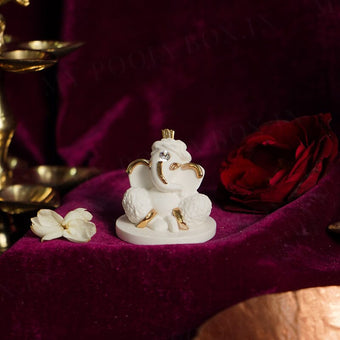
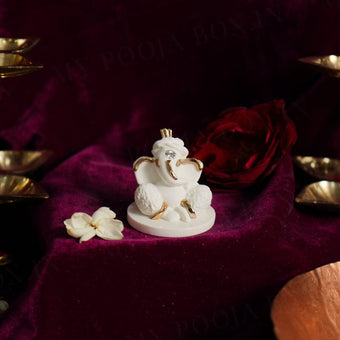
About Marble Ganesha Idols
A marble Ganesha is chosen for stillness. Where brass carries warmth and glass carries light, marble carries weight and quiet, which is why it suits a fixed mandir shelf, a console table, or a corner meant to feel settled. Most pieces h...
About Marble Ganesha Idols
A marble Ganesha is chosen for stillness. Where brass carries warmth and glass carries light, ma...
About Marble Ganesha Idols
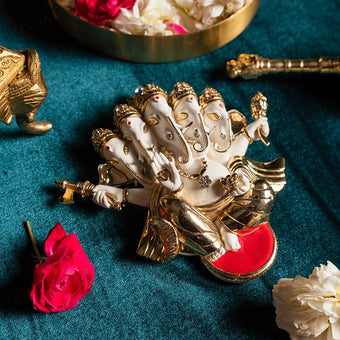
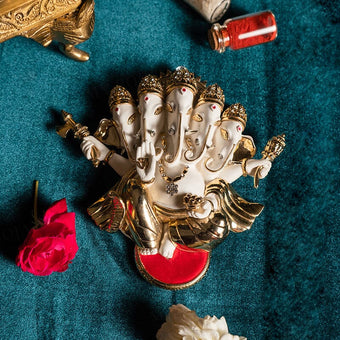
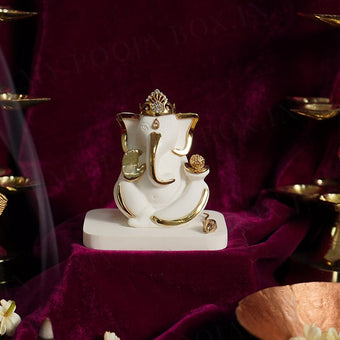
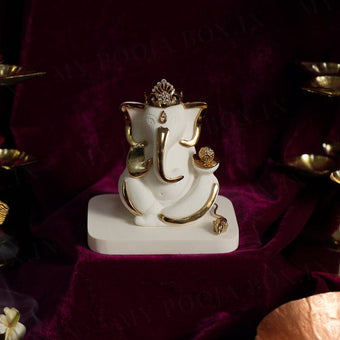
A marble Ganesha is chosen for stillness. Where brass carries warmth and glass carries light, marble carries weight and quiet, which is why it suits a fixed mandir shelf, a console table, or a corner meant to feel settled. Most pieces here are finished with gold-plated detailing on the crown, the ornament, and the dhoti, which lifts the fine work against the pale surface.
These are permanent idols. A marble or marble composite Ganesha stays in your home and is never immersed. If you are looking for an idol specifically for Ganesh Chaturthi, which falls on Monday, 14 September in 2026, you want a natural clay idol made to dissolve at visarjan, and those are in the eco-friendly Ganesha collection.
One thing worth understanding before you buy is that idols sold as marble fall into two quite different groups: solid quarried marble and marble dust composite. Both are legitimate and both are widely sold, but they are not the same material and they do not behave the same way. The next section explains how to tell them apart.
Solid Marble or Marble Dust: What Is the Difference?
Solid marble is quarried stone that is cut and then carved by hand. India's best known white marble comes from Makrana in Rajasthan, the stone used for the Taj Mahal. Marble dust composite, sometimes called bonded marble or cultured marble, is finely ground marble powder mixed with a resin binder and cast in a mould rather than carved.
Neither is a substitute for the other and neither is a lesser choice. They simply suit different things.
|
|
Solid marble
|
Marble dust composite
|
|
How it is made
|
Quarried, cut and carved by hand
|
Marble powder bound with resin, cast in a mould
|
|
Weight
|
Heavy for its size
|
Noticeably lighter for the same size
|
|
Feel
|
Cold to the touch, and stays cold
|
Closer to room temperature
|
|
Surface
|
Natural veining, slight variation piece to piece
|
Even and consistent, no natural veining
|
|
Detail
|
Limited by what a chisel can reach
|
Very fine and repeatable, since it is cast
|
|
If damaged
|
Chips can often be polished or filled by a stone worker
|
Harder to repair invisibly
|
|
Price
|
Higher, and rises steeply with size
|
More affordable, especially at larger sizes
|
|
Immersed
|
Never
|
Never
|
How to Tell Which You Have
Two simple checks. Pick the piece up: solid marble is heavy in a way that is hard to mistake. Then rest your palm against it for a few seconds: solid stone draws heat from your hand and keeps feeling cold, while a composite piece warms to your touch fairly quickly. Natural veining running through the surface is a further sign of quarried stone, since cast pieces are usually uniform.
Looking After Gold-Plated Marble
The Plating Is the Delicate Part
On these idols the marble is durable, and the gold detailing is not. Plating is a very thin layer, so it wears from rubbing long before the marble shows any damage. Dust with a soft dry cloth and nothing more. Do not use metal polish, brass cleaner, toothpaste, solvent or any abrasive on a plated surface, since all of these strip plating quickly and it cannot be restored at home.
If the idol needs more than dusting, use a barely damp soft cloth on the marble areas and keep water away from the plated detail as far as you can, then dry it immediately.
What Marks Marble
Marble stains rather than tarnishes, and the culprits in a pooja room are the everyday ones: oil, ghee, milk, kumkum, and haldi. Wipe these promptly. Anything acidic will etch the surface, meaning it eats a dull patch into the polish, and lemon is the most common mistake because people reach for it to clean brass. Vinegar and descaling products do the same. An etched patch on solid marble can sometimes be repolished by a stone worker, but on a composite piece it usually cannot.
Sunlight and Yellowing
Keep marble idols out of long spells of harsh direct sunlight. Solid marble can yellow slowly over years, and the resin in a composite piece is more sensitive than the stone, so strong sun can dull or discolor it faster. A shelf that gets bright indirect light is ideal, since it shows the piece off without baking it.
Diyas and Oil Lamps
Keep oil lamps and diyas on a separate metal or stone plate rather than directly on the idol's base or on a marble shelf. Oil soaks into marble and leaves a dark ring that is very difficult to lift. This is the single most common way a marble idol in daily use gets permanently marked.
Placement, Weight3 and Wall Hangings
The usual guidance applies: the north east corner of the home, with the idol facing east or north, raised on a chowki, shelf or mandir rather than placed on the floor. Avoid the bedroom, the bathroom, the space under a staircase, and any wall whose reverse side is a bathroom.
Marble adds two practical considerations that lighter materials do not.
Check What It Is Standing On
A larger marble idol concentrates real weight on a small footprint. Glass shelves, thin MDF brackets and folding stands are not always rated for it. Put larger pieces on a solid surface, and if the shelf flexes at all when you press down on it, choose somewhere else. Check also that the base sits flat and does not rock, since a piece that rocks will eventually chip at whichever corner takes the load.
Wall Mounted Pieces
A marble wall hanging, such as a Panchmukhi Ganesha panel, must go into a wall anchor rated for the weight rather than a picture hook or an adhesive strip. Fix it into masonry where you can, use the correct plug, and keep it above head height but not so high that it is awkward to clean or garland. Do not mount a marble panel on a plasterboard partition without a proper fixing.
Car Dashboard Idols
Small marble idols made for a car should have a wide flat base and be secured with an anti slip mat or adhesive pad. An unsecured idol on a dashboard slides under braking, which chips the piece and is a distraction while driving. Keep it away from the windscreen line of sight, and remember that a parked car in Indian summer gets hot enough to affect a resin bonded piece over time.
Shop Marble Ganesha Idols Online in India at My Pooja box
Symbolizing wisdom, knowledge, intellect, understanding, as well as discriminating positive vibes that help people attain a peaceful life and bring in positivity. Lord Ganesha is worshipped with utmost devotion in the Hindu culture and the Ganesha idols are an integral part of every special occasion and pooja ceremony.



Placing the idol of Lord Ganesha made of Marble, clay or any other material and worshipping it is believed to bring in positivity, prosperity and fame to the family. A Lord Ganesha statue made out of wood if placed in your house and worshipped regularly would help in bringing good health, long life, and success to the worshippers. If you are looking for an ideal Ganesh idol to decorate your home.
Buy Marble Ganesha Idols online
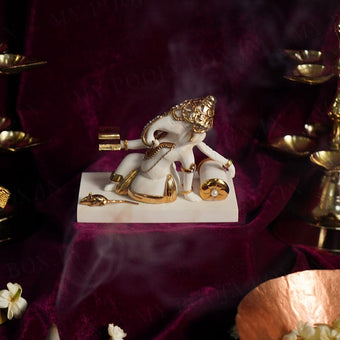
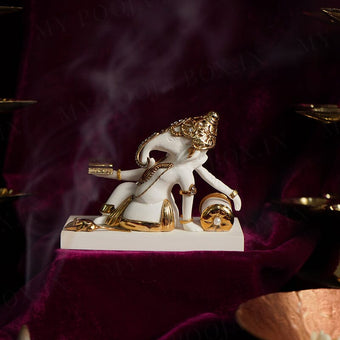
The handcrafted marble Ganesha statue playing tabla is yet another gorgeous Ganesha idol that comes with intricate detailing in gold-tone and the whole statue is carved out of white glossy marble. This beautiful statue is perfect for gifting on special occasions and can also be used as a record to your home and puja room.
Buy Eco friendly Ganesha idols online in India
Eco friendly Ganesha statues are also a great way of decorating your home and Pooja room as they bring in success good health as well as long life to you and your family. If you're looking for an ideal Ganesha idols online in India you should definitely check out my Pooja box online store.
My Pooja box is one of the renowned online gift stores known for offering high quality and affordable home decor items Pooja samagri personal accessories gifts for all festivals and special occasions and personal care items and Marble Ganesha Idols Online in India; all at one place. At My Pooja Box we offer beautifully designed Ganpati idols for home decor as well as gifting on occasions like Diwali, Raksha Bandhan, house warming ceremony, birthdays, anniversaries and so on.
Gorgeous handcrafted marble Ganesha statue with harmonium
This is a beautiful marble Ganesha idol in subtle white tone with beautiful golden detailing in a seated position with harmonium. This affordable and dazzling Ganesha idol is perfect for your car's dashboard gifting as well as home decor.
The dashboard Ganesha made of marble is another affordable option for bringing in the Ganesha idol for your vehicle. This petite Ganesha statue comes in a vibrant combination of white, red and yellow tone and is highly affordable. This is a perfect idol for your vehicle and a gifting option for friends and relatives.
If you want to Buy Marble Ganesha Idols, explore our collection for more such amazing statues and idols. Visit our website, take a look at our huge collection of Ganesha and other idols perfect for decorating your home, pooja room as well as gifting your friends, family and relatives.
Frequently Asked Questions About Marble Ganesha Idols
Q1: What is the difference between a solid marble and a marble dust idol?
Answer: Solid marble is quarried stone that is cut and carved by hand. Marble dust composite, also called bonded or cultured marble, is finely ground marble powder mixed with a resin binder and cast in a mould. Solid marble is heavier, feels cold to the touch and carries natural veining. A composite piece is lighter, warms to your hand more quickly and has an even surface with no veining, but it holds finer cast detail and costs less, particularly at larger sizes. Both are permanent idols and neither is immersed.
Q2. How can I tell whether my marble idol is solid stone or composite?
Answer: Two checks, Lift it: solid marble is distinctly heavy for its size. Then rest your palm against it for a few seconds: solid stone draws heat from your hand and keeps feeling cold, while a composite piece warms up fairly quickly. Natural veining running through the surface is a further sign of quarried stone, since cast pieces are usually uniform in colour.
Q3. Is a marble Ganesha idol good for the pooja room?
Answer: Yes. Marble is one of the materials traditionally associated with a home mandir, valued for permanence and for a sense of calm. It suits a fixed shelf where the idol is not moved often. Place it in the north east corner facing east or north, raised on a chowki or shelf rather than on the floor, and keep oil lamps on a separate plate so oil does not soak into the marble.
Q4. Can a marble Ganesha idol be immersed in visarjan?
Answer: No, Marble, marble composite, brass, stone, silver and glass idols are all permanent pieces that stay in the home and are never immersed. Only natural clay idols made for Ganesh Chaturthi are meant to dissolve in water. If a marble idol is damaged and needs to be retired from worship, it is usually handed to a temple rather than immersed.
Q5:
How do I clean a gold plated marble Ganesha idol?
Answer: Dust it with a soft dry cloth. That is genuinely all that is needed most of the time. Never use metal polish, brass cleaner, toothpaste, solvent or any abrasive on the plated detail, because plating is a very thin layer and these strip it permanently. If the marble needs more than dusting, use a barely damp soft cloth on the marble areas, keep water off the plating as far as possible, and dry the idol immediately.
Q6. Why should I not use lemon on a marble idol?
Answer: Lemon is acidic, and acid etches marble. Etching means the acid eats a dull patch into the polished surface, which is different from a stain and cannot be wiped away. Vinegar and descaling products do the same thing. This is a common mistake because lemon is a standard remedy for cleaning brass, but on marble it causes damage. An etched patch on solid marble can sometimes be repolished by a stone worker, but on a composite piece it usually cannot be repaired.
Q7. What stains a marble idol, and how do I prevent it?
Answer: In a pooja room the usual culprits are oil, ghee, milk, kumkum and haldi. Marble is porous, so these soak in if they are left to sit. Wipe spills promptly with a soft damp cloth. The most common cause of permanent marking is a diya placed directly on the idol's base or on a marble shelf, which leaves an oil ring that is very hard to lift. Keep lamps on a separate metal or stone plate.
Q8. Will a marble idol turn yellow over time?
Answer: It can, if it sits in harsh direct sunlight for long periods. Solid marble yellows slowly over years. A marble dust composite piece is more sensitive, because the resin binder reacts to strong ultraviolet light faster than stone does, so it can dull or discolour sooner. A shelf with bright indirect light is the best position, since it shows the detail without exposing the piece to hours of direct sun.
Q9. How do I hang a marble Ganesha wall panel safely?
Answer: Use a wall anchor rated for the weight of the piece, not a picture hook or an adhesive strip. Fix into masonry with the correct plug wherever possible, and do not mount a marble panel on a plasterboard partition without a proper fixing. Hang it above head height but low enough that you can comfortably clean it and offer a garland.
Q10. Is a marble Ganesha suitable for a car dashboard?
Answer: Small marble idols made for a car work well, provided the base is wide and flat and the idol is secured with an anti-slip mat or adhesive pad. An unsecured idol slides under braking, which chips the piece and is a distraction while driving. Keep it out of your line of sight through the windscreen, and bear in mind that a parked car in Indian summer gets hot enough to affect a resin bonded composite piece over time.
 Healing Crystals
 Pooja Essentials
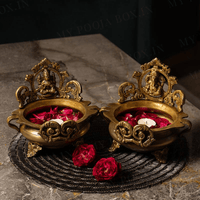 Brass Home Decor
 Limited Edition
 Himalayan Salt Lamps
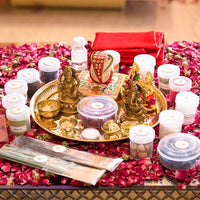 Pooja Room Decor
 Evil Eye
 Urlis
Urlis
 God Idols