The Forms of Ganesha and What They Mean
Ganesha is worshipped in many named forms. The Mudgala Purana describes eight principal incarnations, known together as the Ashtavinayaka, and later texts list thirty two forms in all. Several of the names below appear on ido...
The Forms of Ganesha and What They Mean
Ganesha is worshipped in many named forms. The Mudgala Purana describes eight princip...
The Forms of Ganesha and What They Mean
Ganesha is worshipped in many named forms. The Mudgala Purana describes eight principal incarnations, known together as the Ashtavinayaka, and later texts list thirty two forms in all. Several of the names below appear on idols in this collection.
|
Name
|
Literal meaning
|
What it represents
|
|
Vakratunda
|
Curved trunk
|
The form that straightens what is crooked and brings the wayward back to a right path
|
|
Ekadanta
|
One tusked
|
Sacrifice and single minded purpose, from the story of the broken tusk
|
|
Lambodara
|
Large or hanging belly
|
That all creation is held within him, and the capacity to absorb everything life brings
|
|
Gajavaktra or Gajanana
|
Elephant faced
|
The elephant head itself, associated with wisdom, memory and steady strength
|
|
Vighneshvara or Vighnaraja
|
Lord of obstacles
|
The power both to place and to remove obstacles, which is why he is invoked before any new venture
|
|
Mahodara
|
Great belly
|
The vastness that contains the whole universe
|
|
Vikata
|
Unusual in form
|
The overcoming of desire
|
|
Dhumravarna
|
Smoke coloured
|
The subduing of ego
|
|
Vinayaka
|
The one who removes
|
A general and very common name for Ganesha as remover of obstacles
|
|
Bala Ganapati
|
Child Ganesha
|
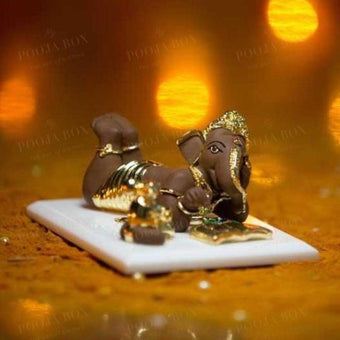
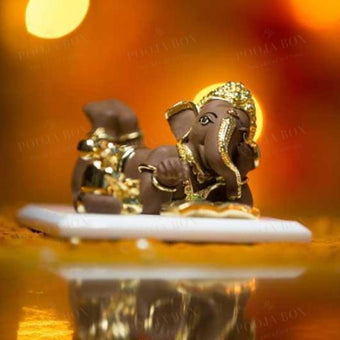
The child form, associated with innocence, new beginnings and often kept in children's rooms
|
|
Nritya Ganapati
|
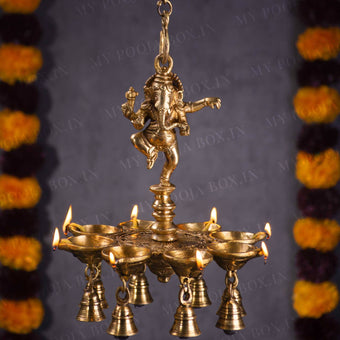
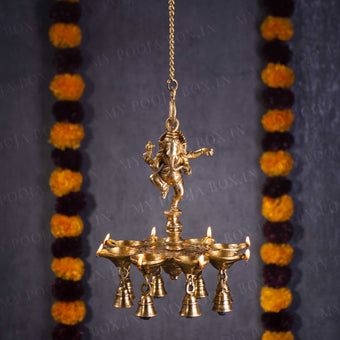
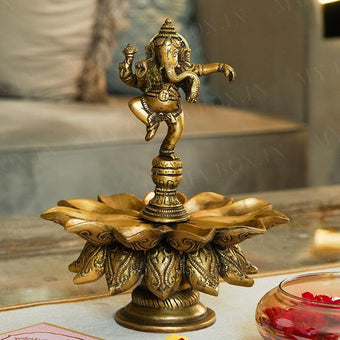
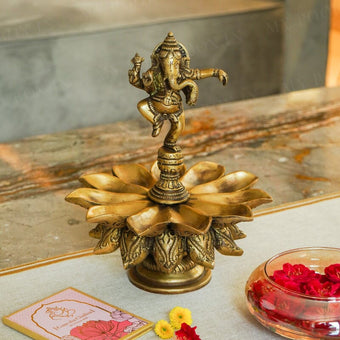
Dancing Ganesha
|
Joy and creative energy, commonly chosen for studios and creative spaces
|
|
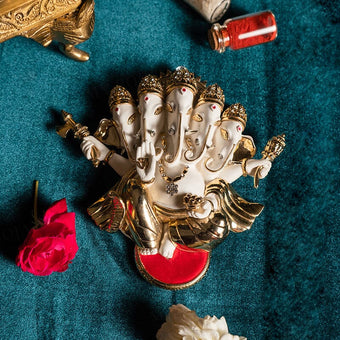
Panchmukhi
|
Five faced
|
A form showing five faces, associated with protection on all sides
|
No form is considered better than another. Households usually choose either the form whose meaning speaks to them, or simply the piece they find most beautiful, and both are accepted reasons.
Riddhi, Siddhi and the Mouse
Ganesha with Riddhi and Siddhi
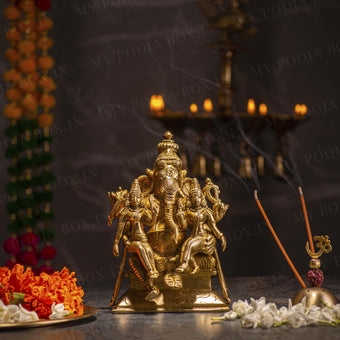
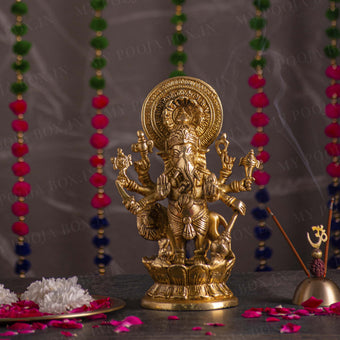
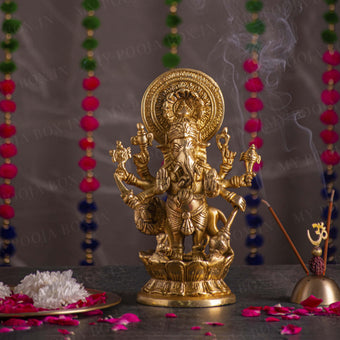
Some idols show Ganesha seated with two female figures. These are Riddhi and Siddhi. Riddhi is associated with prosperity and Siddhi with attainment, the successful completion of what has been begun. Together they represent an idea worth having in a home: that prosperity and accomplishment sit on either side of wisdom.
Traditions differ on this point, and it is worth saying so. Some texts name Ganesha's consorts as Siddhi and Buddhi, others as Riddhi and Siddhi, and some traditions, particularly in parts of South India, hold that Ganesha is celibate and depict him alone. All of these are long standing. If you have seen a different version at home or in your family temple, you have not been told anything wrong.
Why the Mouse
Ganesha is almost always shown with a mouse, his vahana or vehicle. The usual reading is that the mouse can reach anywhere and get through any gap, which mirrors Ganesha's ability to find a way past any obstacle. A second reading treats the mouse as desire, small and quick and endlessly hungry, kept calm and steady beneath him. On most idols the mouse sits at the base, often facing the deity with a modak nearby.
What He Holds
The objects in Ganesha's hands carry meaning too. The ankusha, a goad, is for guiding and urging forward. The pasha, a noose, is for drawing closer what is needed and restraining what is not. The modak is the sweetness of a life lived well. And one hand is usually raised in abhaya mudra, the gesture of reassurance, which is simply a promise not to be afraid.
Puja Idol or Showpiece?
This collection holds both, and it helps to know which you are buying.
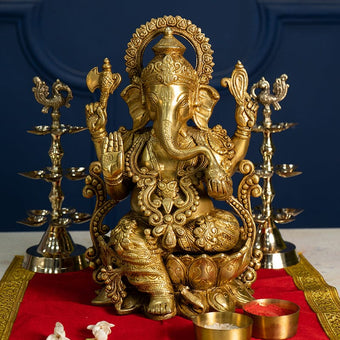
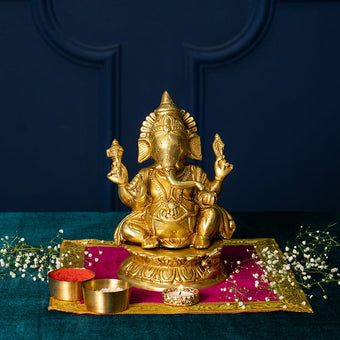
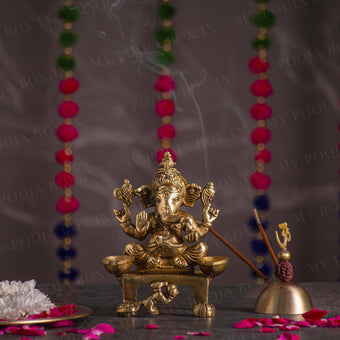
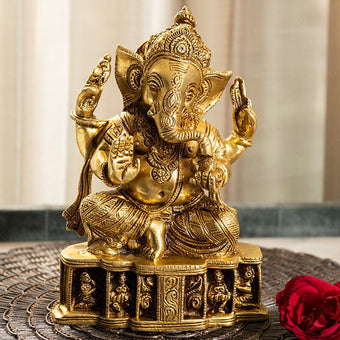
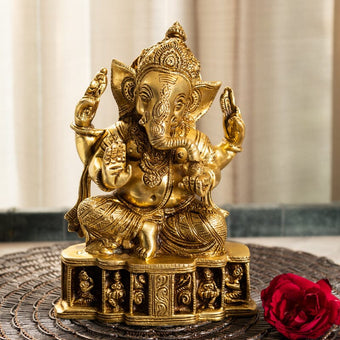
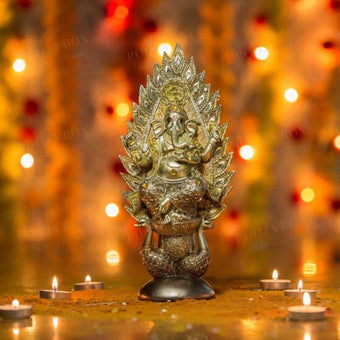
A puja idol is the one installed in your mandir and worshipped daily. It is usually a seated form with the trunk curving left, kept on a chowki or shelf, and most households keep one. Traditional practice favours brass, panchaloha, copper, wood and stone for this.
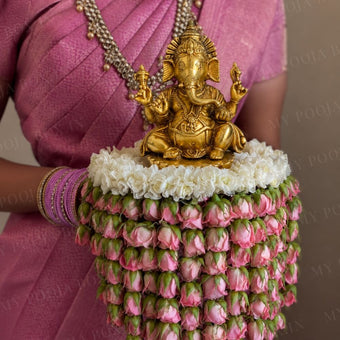
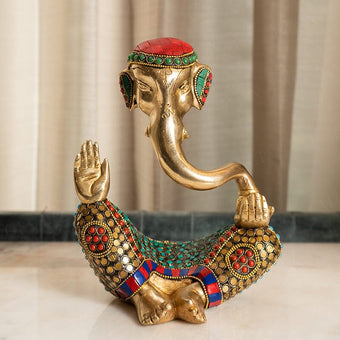
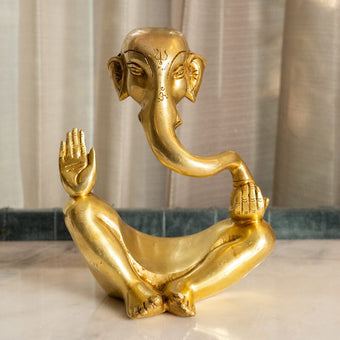
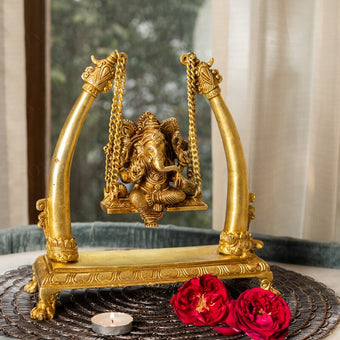
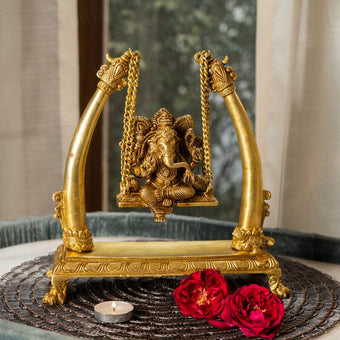
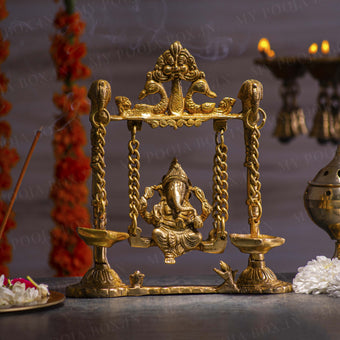
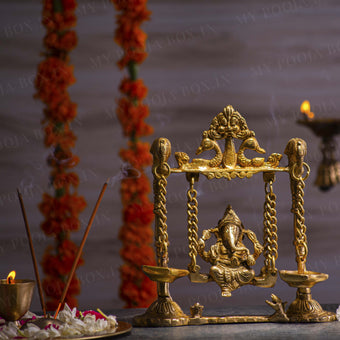
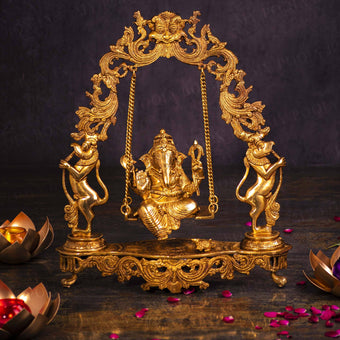
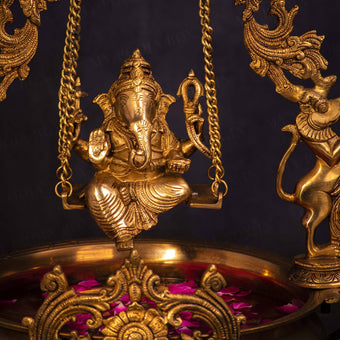
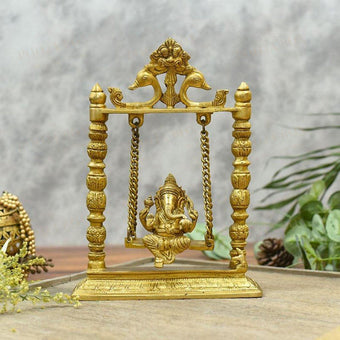
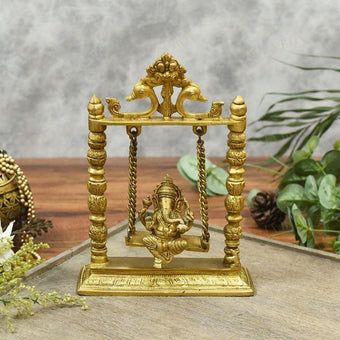
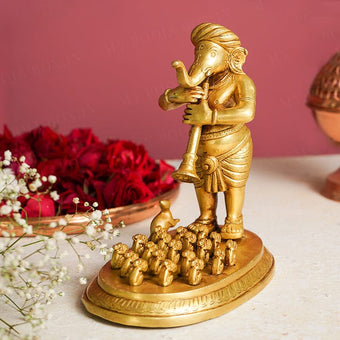
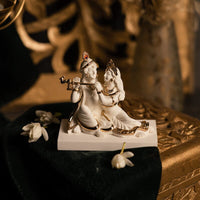
A showpiece or figurine is a decorative depiction. Ganesha playing a flute, a sitar, a tabla or a dholak, a dancing Ganesha, a Ganesha on a jhula, a Ganesha diya or a t light holder all fall into this group. They are made to be looked at and enjoyed rather than to be the focus of daily ritual.
Keeping both is entirely normal, and a decorative Ganesha is not treated as lesser. The distinction most households make is simply that one idol is worshipped and the others are displayed. Both should be kept raised rather than on the floor, and both should be handled respectfully.
A Note on Musical Forms
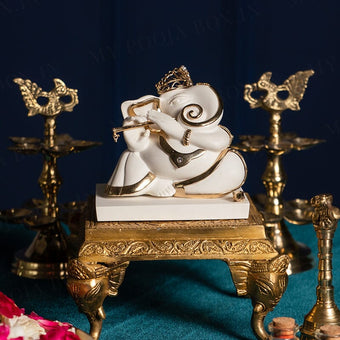
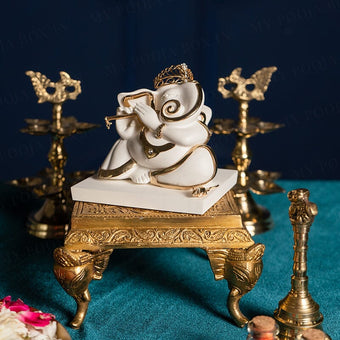
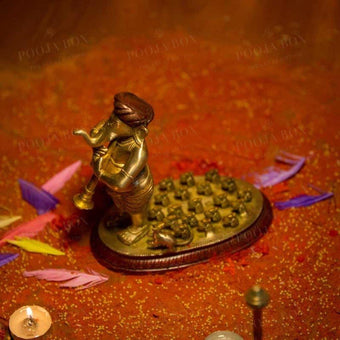
Ganesha shown with an instrument is a modern and much loved decorative tradition rather than a classical iconographic form. These pieces suit a living room, a study or a music room, and they make popular gifts precisely because they are warm and unstuffy. If you are buying an idol for daily worship, choose a seated form instead.
How to Judge a Handcrafted Brass Idol
Add below the product grid, after section 4. Useful for the higher value pieces in this collection.
Brass idols vary widely in price, and the difference is usually in how they were made rather than in size alone.
Weight
Weight is the first thing to check. A solid cast brass idol is noticeably heavy for its size. A hollow or thin walled piece feels light and often sounds hollow when tapped gently at the base. Neither is wrong, but they should not cost the same.
Detail and Finish
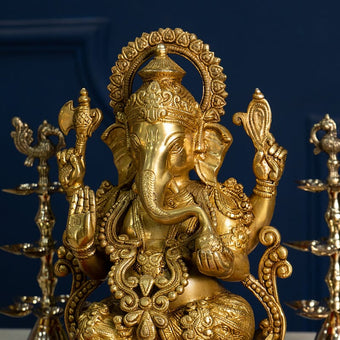
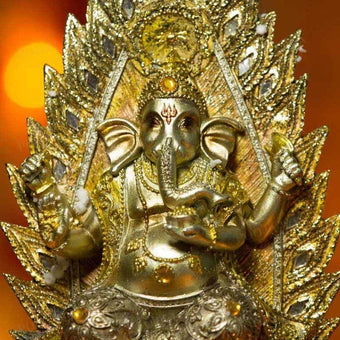
Look at the fine work: the folds of the dhoti, the ornament on the crown, the toes and the fingers, the eyes. On a well made piece these stay crisp. Look also at the underside and the back, which is where rushed finishing shows first. Hand finished pieces carry small irregularities, and these are a sign of handwork rather than a flaw.
Antique Finish
An antique brass finish is a deliberate darkened patina applied to give depth, not a sign of age. It should look even, sit in the recesses rather than on the raised surfaces, and not rub off on your fingers. If you prefer bright brass, remember that all brass darkens naturally over time and many households come to prefer it that way.
Stone and Enamel Work
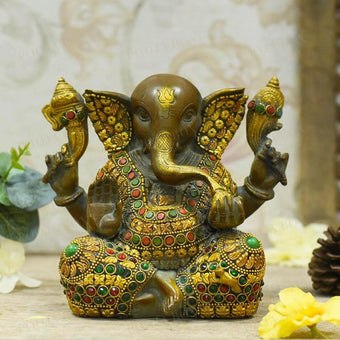
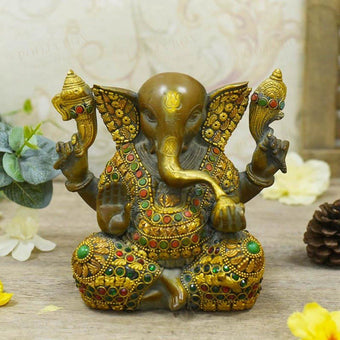
On pieces set with stones or coloured enamel, check that the settings are flush and that no stone moves when pressed gently. On marble and stone idols, look for even colour and check the base sits flat without rocking.
Shop for Eco-Friendly Ganesha and Ganesha Figurines Online in India
Welcome to MyPoojaBox, your one-stop destination for exquisite Ganesha Idols.
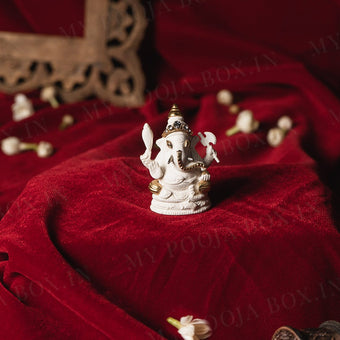
Ganesh Chaturthi holds immense importance in India, where Lord Ganesha is revered as the remover of obstacles and the harbinger of good fortune. This Ganesh Chaturthi, instead of embarking on a search for Ganesha idols, indulge in a leisurely shopping experience at MyPoojaBox. Discover our exquisite assortment of eco-friendly Ganesha idols and figurines that will enhance the grandeur of your festive celebrations.
Eco-Friendly Ganesha:
Embrace sustainability and celebrate Ganesh Chaturthi with our eco-friendly Ganesha idols. Crafted from natural biodegradable clay, these idols not only contribute to environmental conservation but also hold deep spiritual significance. After the visarjan (immersion), these idols dissolve easily into the earth, leaving no traces behind. What's more, each idol comes with a seed that can be planted, symbolizing the cycle of life and growth. Choose from sizes ranging from 6 inches to 10 inches and 1 foot to 1.5 feet and invite the blessings of Lord Ganesha in a sustainable and eco-conscious way.
Ganesha Figurines:
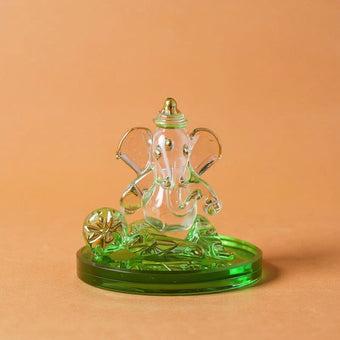
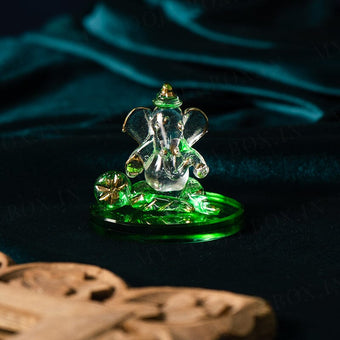
Discover our exquisite collection of Ganesha figurines that make for beautiful additions to your home or office decor. These intricately crafted figurines capture the essence of Lord Ganesha in various poses and forms. Whether you want a playful Ganesha playing the flute (Bansuri), or a Ganesha playing the sitar, shenai, dholak, or tabla, we have a wide variety to choose from. These figurines not only add aesthetic charm but also serve as auspicious symbols of prosperity, wisdom, and positivity.
Discover More Treasures at MyPoojaBox
While you're here, we invite you to explore our diverse range of products beyond Ganesha Idols. Discover our exclusive collection of Raksha Bandhan products, Bhai Dooj essentials, Holi organic colors, and much more. We strive to bring you the finest quality products that enhance your spiritual practices and festive celebrations.
At MyPoojaBox, we are committed to providing you with a seamless shopping experience, exceptional customer service, and products that resonate with your devotion and style. Celebrate Ganesh Chaturthi with reverence and joy by bringing home an eco-friendly Ganesha or adorning your space with a Ganesha figurine from MyPoojaBox.
Shop now and immerse yourself in the divine blessings of Lord Ganesha!
Frequently Asked Questions About Ganesh Murtis and Idols
1. What is the best material for a Ganesh murti for home puja?
Answer: For home puja, clay Ganesh idols are the most popular choice due to their eco-friendly nature and cultural significance. They dissolve easily in water and don’t harm the environment. You can also opt for Ganesh murtis made of brass or wood for a more durable option. Explore our Ganpati murti collection at My Pooja Box to find the best fit for your home.
2. Can I find a Ganesh idol in a traditional or modern design?
Answer: Yes, My Pooja Box offers a wide variety of Ganesh idols, ranging from traditional Ganesh murtis made of clay to more modern Ganpati designs in wood or resin. Whether you prefer a classic Ganesh ji murti or something contemporary, we have the perfect Ganesh idol for your home or temple.
3. What are the different types of Ganpati murtis available for Ganesh Chaturthi?
Answer: For Ganesh Chaturthi, we have an extensive collection of Ganpati murtis made from clay, brass, wood, and eco-friendly materials like tree Ganesha idols. Our Ganesh idols come in various sizes and designs, including traditional Ganesh ji murti and modern Ganapati idols, perfect for every style and space.
4. Is there a silver Ganesh idol available for my home shrine?
Answer: Yes, we offer a variety of silver Ganesh idols at My Pooja Box, ideal for adorning your home shrine or temple. These Ganesh idols add a touch of elegance and divinity to your spiritual space. Our Ganesh ji murti in silver is crafted to perfection, combining luxury with spirituality.
5. Can I find eco-friendly Ganesh idols for Ganesh Chaturthi?
Answer: Absolutely! We have a beautiful collection of eco-friendly Ganesh idols, including clay Ganpati idols and tree Ganesh idols, that are perfect for celebrating Ganesh Chaturthi sustainably. These eco-friendly Ganesh idols are biodegradable and help preserve the environment during your celebration.
6. What makes a Vinayaka idol different from a regular Ganesh idol?
Answer: A Vinayaka idol is essentially another name for Lord Ganesh. The term “Vinayaka” is often used to refer to the remover of obstacles and the one who brings wisdom and prosperity. The Vinayaka idol can be a traditional Ganesh ji murti or a unique, modern design that represents the same divine energy.
7. What size Ganesh murti is best for a small apartment?
Answer: For a small apartment, a small Ganesh idol or a compact Ganesh murti made of clay or brass is perfect. Choose a clay Ganesh idol between 6-12 inches, which will fit comfortably while still making a spiritual statement. Browse our Ganesh idol collection for the ideal size and material for your space.
8. How do I properly care for a Ganesh idol at home?
Answer: To properly care for your Ganesh idol, dust it regularly with a soft cloth to maintain its shine. If your Ganesh ji murti is made of silver, avoid using harsh chemicals or cleaners. For clay Ganesh idols, ensure they are kept away from excess moisture to preserve their integrity. At My Pooja Box, we also offer tips and accessories for idol care.
9. Is a Ganesh idol made of clay better than other materials?
Answer: Yes, clay Ganesh idols are considered the best for Ganesh Chaturthi due to their eco-friendly nature. They are biodegradable, making them ideal for immersion in water. Unlike idols made of plastic or other harmful materials, clay Ganpati idols dissolve harmlessly and are a sustainable choice for both tradition and the environment.
10. Can I buy a small Ganesh idol for gifting purposes?
Answer: Yes, small Ganesh idols make perfect gifts for special occasions like weddings, housewarmings, or festivals. At My Pooja Box, we offer a range of small Ganesh idols in clay and brass that can be beautifully packaged as thoughtful and auspicious gifts. These Ganesh idols bring blessings of prosperity and happiness to the recipient’s home.
11. What are the eight forms of Ganesha, the Ashtavinayaka?
The Mudgala Purana describes eight principal incarnations of Ganesha, known together as the Ashtavinayaka. They are Vakratunda, the one who straightens a crooked path; Ekadanta, the one tusked; Mahodara, the great bellied; Gajavaktra, the elephant faced; Lambodara, the one with a large belly; Vikata, unusual in form; Vighnaraja, lord of obstacles; and Dhumravarna, smoke coloured. Later texts list thirty two forms in all. No form is considered better than another.
12. What does Lambodara mean?
Lambodara comes from lamba, meaning large or hanging, and udara, meaning belly. The name is usually read as meaning that the whole of creation, animate and inanimate, is held within him. In practical terms it is also read as the capacity to absorb whatever life brings without being unsettled by it. Idols named Lambodar show the deity with a full, rounded belly as the defining feature.
13. What is a Panchmukhi Ganesha?
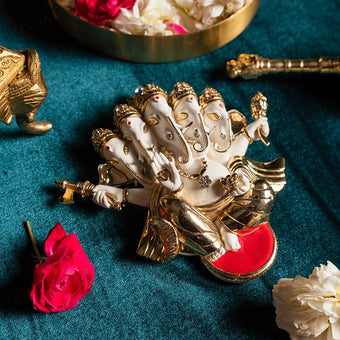
Panchmukhi means five faced. It is a form of Ganesha shown with five faces rather than one, associated with protection on all sides and with a more expansive, encompassing aspect of the deity. Panchmukhi pieces are often chosen as a wall hanging or a centrepiece rather than as a small shelf idol, because the form reads best at a size where all five faces are clearly visible.
14. Who are Riddhi and Siddhi, and why is Ganesha shown with them?
Riddhi is associated with prosperity and Siddhi with attainment, the successful completion of what has been begun. An idol showing Ganesha seated between them represents wisdom flanked by prosperity and accomplishment. Traditions differ on this: some texts name the consorts as Siddhi and Buddhi, others as Riddhi and Siddhi, and some traditions, particularly in parts of South India, hold that Ganesha is celibate and show him alone. All of these are long standing and none is incorrect.
15. Why is Ganesha always shown with a mouse?
The mouse is Ganesha's vahana, or vehicle. The usual reading is that a mouse can reach anywhere and slip through any gap, which mirrors Ganesha's ability to find a way past any obstacle. A second reading treats the mouse as desire, small and quick and endlessly hungry, kept calm and steady beneath him. On most idols the mouse sits at the base, often facing the deity with a modak nearby.
16. Can a decorative Ganesha figurine be worshipped?
A decorative figurine, such as Ganesha playing a flute or sitar or seated on a jhula, is generally kept as a showpiece rather than as the idol installed for daily worship. Most households keep one seated idol for puja and display other Ganesha pieces around the home. A decorative piece is not treated as lesser, and there is no prohibition on keeping one in the mandir. If you are choosing an idol specifically for daily worship, a seated form with the trunk curving left is the usual choice.
17. Why do brass Ganesha idols vary so much in price?
The difference is usually in how the idol was made rather than in size alone. A solid cast brass idol is heavy for its size and holds fine detail in the crown, the dhoti folds, the fingers and the eyes, including on the back and underside. A lighter, thin walled or machine finished piece costs considerably less. Stone or enamel work, hand finishing and antique patina all add to the price as well.
18. What does an antique brass finish mean?
An antique finish is a darkened patina applied deliberately to give the piece depth and to make the detail read more clearly, rather than a sign that the idol is old. On a well finished piece the darkening sits in the recesses rather than on the raised surfaces, looks even across the idol, and does not rub off on your fingers. All brass darkens naturally over time in any case, and many households prefer it that way and clean the idol only before major festivals.
 Healing Crystals
 Pooja Essentials
 Brass Home Decor
 Limited Edition
 Himalayan Salt Lamps
 Pooja Room Decor
 Evil Eye
 Urlis
Urlis
 God Idols