











Raksha Bandhan is a celebration of the bond between brothers and sisters, marked by sacred traditions passed down over generations. While tying a thread on your brother’s wrist is the heart of the festival, doing so according to the traditional rakhi puja vidhi ensures spiritual purity, divine blessings, and well-being.
Whether you are performing the rituals at home or sending a rakhi online to a brother far away, following the authentic raksha bandhan rituals ensures the sanctity of this ancient celebration remains intact.
The Vedic Significance of Raksha Bandhan
Raksha Bandhan originates from ancient Vedic scriptures, where the phrase “Raksha Bandhan” translates directly to "the bond of protection." In Vedic tradition, the sacred thread known as the Raksha Sutra or Mouli was not restricted to siblings alone. Sages and priests tied it on the wrists of kings and disciples to ward off negative energies and evil influences.
Why It Is More Than Just a Thread
In Hindu philosophy, the silk thread tied during Raksha Bandhan symbolizes a sacred vow. When a sister ties the thread, she invokes divine protection over her brother's physical, mental, and spiritual well-being. In return, the brother commits to safeguarding her through life's trials. The thread carries the spiritual weight of mantras, making it a protective shield (Kavach).
Shubh Muhurat: The Most Auspicious Time to Tie Rakhi
Performing the puja vidhi during an auspicious timing (Shubh Muhurat) is critical to maximizing the spiritual benefits of the ceremony. According to the Hindu Panchang, Raksha Bandhan is celebrated on the Purnima (full moon day) of the Shravana month.
Key Rule: Always check the daily Panchang to ensure the Muhurat aligns with Aparahna (afternoon time) or Pradosh (early evening time). Tying Rakhi during these times brings prosperity and peace.
The Danger of Bhadra Kaal: When NOT to Tie Rakhi
One of the most important rules of Raksha Bandhan is to strictly avoid Bhadra Kaal.
In Vedic astrology, Bhadra is considered a malevolent period during which any auspicious work, especially tying Rakhi, is forbidden. According to mythology, Surpanakha tied a Rakhi to her brother Ravana during Bhadra Kaal, which ultimately led to the downfall of his kingdom. Always ensure Bhadra has ended before starting the ritual.
Step-by-Step Rakhi Puja Vidhi at Home
To perform the complete ritual accurately, follow this sequential guide divided into five essential phases.
Phase 1: Arranging the Traditional Rakhi Puja Thali
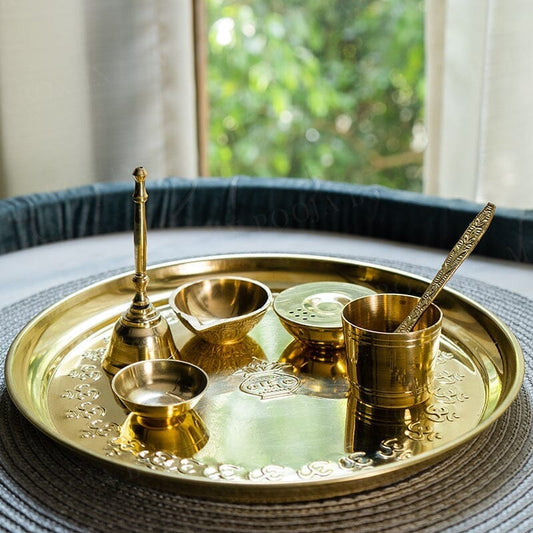
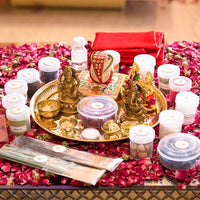
Before beginning, assemble a sacred Thali (plate) with the following essential items:
-
Roli (Kumkum): For applying the auspicious red mark on the forehead.
-
Akshat: Unbroken raw rice grains symbolizing abundance and completeness.
-
Chandan (Sandalwood paste): For a calming, spiritual influence.
-
Diya: A small oil or ghee lamp representing light and divine energy.
-
Sweets: Traditional Indian sweets (like Ladoo or Kaju Katli) to sweeten the bond.
-
Rakhi: The sacred thread or talisman.
-
Small Cup of Water: To sprinkle or cleanse as needed.
Phase 2: Preparing the Mind and Body (The Fast)
On the morning of Raksha Bandhan:
-
Wake up during Brahma Muhurat (before sunrise), take a holy bath, and wear clean traditional attire.
-
Sisters traditionally observe a short fast, abstaining from food until the Rakhi is tied and the Aarti is complete.
-
Light a lamp in your home temple (Pooja Ghar) and seek blessings from Lord Ganesha and your Ishta Devta.
Phase 3: The Application of Tilak and Akshat
-
Seating Direction: The brother should face East or North (directions associated with positive energy and growth), while the sister faces him.
-
Covering the Head: Both siblings should cover their heads with a cloth or dupatta as a sign of respect to the divine.
-
The sister applies a mix of Roli and Chandan as a Tilak on the center of the brother's forehead (the Agya Chakra), followed by gently sticking unbroken Akshat grains onto the tilak.
Phase 4: Chanting the Sacred Rakhi Mantra
While tying the thread on the brother's right wrist, the sister should chant the ancient Vedic rakhi mantra:
"Yena baddho bali raja danavendro mahabala|
Tena twam anubadnami rakshe ma chala ma chala||"
Meaning: "I tie you with the same protective thread with which the mighty demon king Bali was bound. O Raksha (thread), stay firm and never fail to protect."
Chanting this mantra sanctifies the thread and infuses it with protective energy.
Phase 5: Tying the Rakhi and Performing the Aarti
-
Tying the Thread: Securely tie the Rakhi around the brother's right wrist while reciting the mantra.
-
Performing Aarti: Wave the lighted Diya clockwise in front of the brother three times to remove negative vibrations and invoke long life.
-
Offering Sweets: Feed a piece of sweet to the brother, and he feeds a piece to the sister in return.
-
Exchange of Blessings & Gifts: The brother touches the sister's feet (if elder) or seeks her blessings, presenting a gift as a token of protection and care.
How Rakhi Vidhi Changes Across India
While the spirit of protection remains universal, raksha bandhan rituals vary across different regions of India:
|
Region |
Regional Name |
Key Ritual Differences |
|
North India |
Raksha Bandhan |
Focuses heavily on the sister-brother bond, thali arrangement, tilak, and gift exchanges. |
|
West India (Maharashtra & Gujarat) |
Narali Purnima |
Coastal communities offer coconuts (Naral) to the sea god Varuna to seek safety for fishermen before launching boats. |
|
South India (Tamil Nadu & Andhra Pradesh) |
Avani Avittam / Jandhyam Purnima |
Brahmins change their sacred thread (Yajnopavitam) after taking a holy dip in rivers, renewing spiritual vows. |
Celebrating Distance: Sending Rakhi Online
If your brother lives in another city or country, distance does not mean compromising on traditions. You can easily order a rakhi online to reach him before the Shubh Muhurat.
To maintain the sanctity of the rakhi puja vidhi from afar:
-
Send a complete kit containing a designer Rakhi, Roli, Akshat, and a sweet box.
-
Connect via video call during the auspicious time to recite the rakhi mantra together while he ties the thread himself or receives help from family.
By combining ancient Vedic procedures with modern convenience, you ensure that your bond remains strong, blessed, and protected no matter where you are.