







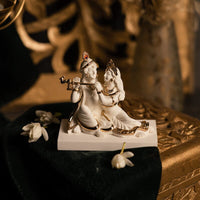





















Whenever adharma (unrighteousness) rises and dharma (righteousness) declines, the Preserver of the Universe, Lord Vishnu, manifests on Earth to restore cosmic balance. Through his 10 divine avatars, Lord Vishnu guides humanity through ages of darkness toward light. Each avatar teaches us that dharma may falter, but it never perishes.
From Matsya, the savior of life during the great flood, to Kurma, the pillar of stability; from Rama’s valor to Krishna’s wisdom, and finally to Kalki, the prophesied warrior who will end the age of chaos, these avlatars of Vishnu embody the cosmic forces that guide creation, protection, and transformation.
In this blog, we explore the significance of the 10 divine avatars of Vishnu and how they represent strength, wisdom, and the eternal protection of dharma.
What Are the 10 Divine Avatars of Lord Vishnu?
The Dashavatara (10 avatars) of Lord Vishnu represent different divine manifestations that occur at crucial points in the cosmic timeline. Each avatar has a specific role and purpose, from the beginning of creation to the ultimate destruction of evil in the end of times. These avatars highlight Lord Vishnu’s supreme role as the Preserver of life and protector of righteousness.
Here are the 10 avatars and their significance:
1. Matsya (The Fish)
-
Role: The first avatar, Matsya, appears during a great flood, saving the sacred scriptures and the sages. He symbolizes protection and preservation of life.
-
Significance: Matsya teaches us about resilience and the ability to navigate through life’s challenges, much like a fish moving through water.
2. Kurma (The Tortoise)
-
Role: Kurma, the tortoise, supports the mountain Mandara during the churning of the ocean (Samudra Manthan), serving as a foundation to obtain the nectar of immortality.
-
Significance: Kurma represents stability and strength, teaching the importance of supporting others in their times of need.
3. Varaha (The Boar)
-
Role: In this form, Vishnu takes the shape of a boar to rescue the Earth (personified as Bhudevi) from the demon Hiranyaksha, who had submerged it into the ocean.
-
Significance: Varaha teaches the lesson of sacrifice, as he dives into the depths of the ocean to restore balance and protect the Earth.
4. Narasimha (The Man-Lion)
-
Role: Vishnu incarnates as Narasimha, a man-lion hybrid, to protect his devotee Prahlada and destroy the demon king Hiranyakashipu, who had a boon that made him invincible.
-
Significance: Narasimha symbolizes protection and fearlessness in the face of evil, teaching that justice will prevail despite any obstacles.
5. Vamana (The Dwarf)
-
Role: Vamana is a dwarf Brahmin who asks the demon king Bali for three paces of land and then expands to cover the entire universe in three steps.
-
Significance: Vamana teaches the value of humility, showing that even the most modest beings can achieve great things if they are dedicated to their cause.
6. Parashurama (The Warrior with an Axe)
-
Role: Parashurama, a Brahmin warrior, wields an axe to rid the world of corrupt Kshatriya rulers who had abused their power.
-
Significance: This avatar teaches the importance of righteousness in leadership and the need for justice, even if it requires force to restore balance.
7. Rama (The Prince of Ayodhya)
-
Role: Rama, the seventh avatar, is the ideal king and the hero of the Ramayana. He embodies virtue, duty, and honor in his mission to rescue his wife, Sita, from the demon king Ravana.
-
Significance: Rama’s courage and devotion to dharma make him the embodiment of righteousness and ideal leadership.
8. Krishna (The Divine Cowherd)
-
Role: Krishna, one of the most beloved and influential avatars of Vishnu, is a divine prince and a charioteer who imparts the teachings of the Bhagavad Gita to Arjuna.
-
Significance: Krishna’s wisdom, his role in the Mahabharata, and his guidance on duty, devotion, and karma make him the ultimate teacher of dharma and divine love.
9. Buddha (The Enlightened One)
-
Role: In some traditions, Lord Vishnu incarnates as Buddha, the founder of Buddhism, to teach the principles of compassion, non-violence, and the path to enlightenment.
-
Significance: Buddha emphasizes inner peace and spiritual awakening, showing that the path to liberation lies in overcoming suffering through compassion and wisdom.
10. Kalki (The Future Warrior)
-
Role: Kalki is the future avatar of Vishnu, who will appear at the end of Kali Yuga (the current age) to destroy evil and restore the world to its original, truthful state.
-
Significance: Kalki represents the end of chaos and the beginning of a new era, teaching that truth and righteousness will ultimately prevail, no matter how dark the times may become.
What is the Significance of Lord Vishnu’s 10 Avatars?
The Dashavatara (10 avatars) of Lord Vishnu symbolize the divine interventions that occur at critical moments in cosmic history. Each avatar serves a unique purpose:
-
Matsya (The Fish) – Rescue during times of destruction.
-
Kurma (The Tortoise) – Stability and the foundation of cosmic balance.
-
Varaha (The Boar) – Protection of Earth.
-
Narasimha (The Man-Lion) – Victory over evil.
-
Vamana (The Dwarf) – Humility and cosmic justice.
-
Parashurama (The Warrior with an Axe) – Righteousness in leadership.
-
Rama (The Prince of Ayodhya) – Virtue, duty, and honor.
-
Krishna (The Divine Cowherd) – Divine love and the guidance of dharma.
-
Buddha (The Enlightened One) – Compassion and spiritual enlightenment.
-
Kalki (The Future Warrior) – Restoration of order and justice.
Each form of Vishnu represents a divine quality that sustains the universe, ensuring that dharma and truth prevail across time.
How Can the 10 Avatars of Vishnu Guide Your Spiritual Journey?
The 10 avatars of Vishnu offer profound lessons in spiritual growth, moral integrity, and the balance of dharma. Each avatar provides guidance in different areas of life:
-
Rama’s courage teaches us about the importance of duty and honor.
-
Krishna’s wisdom reminds us of the path of selfless action.
-
Narasimha’s power inspires us to protect the righteous and fight against injustice.
By reflecting on the teachings of these avatars, we can apply their principles of devotion, duty, and wisdom to our own lives, helping us navigate challenges with strength and faith.
Embrace the Divine Presence of Vishnu’s Avatars
The 10 avatars of Lord Vishnu represent the eternal battle between good and evil, creation and destruction, and the constant flow of cosmic balance. These divine forms guide us through the darkness of ignorance to the light of knowledge and righteousness.
As we invoke the blessings of Vishnu’s avatars, we are reminded that dharma always prevails, and truth will always rise to restore balance in the universe. May the teachings of Matsya, Rama, Krishna, and the rest of Vishnu’s divine forms inspire you to walk the path of righteousness, faith, and inner strength.