

























Whenever adharma (unrighteousness) rises and dharma (righteousness) declines, the Preserver of the Universe, Lord Vishnu, manifests on Earth to restore cosmic balance. Through his 10 divine avatars, Lord Vishnu guides humanity through ages of darkness toward light. Each avatar has a distinct purpose and teaches humanity valuable lessons about righteousness, wisdom, and justice.
From Matsya, the savior during the great flood, to Kurma, the pillar of stability; from Rama’s valor to Krishna’s wisdom, and finally to Kalki, the prophesied warrior who will end the age of chaos, every avatar of Lord Vishnu demonstrates that while dharma may falter, it never perishes.
In this blog, we explore the 10 avatars of Lord Vishnu, their significance, and the lessons each avatar imparts to humanity in restoring cosmic balance.
What Are the 10 Avatars of Lord Vishnu?
The Dashavatara (10 avatars) of Lord Vishnu represent the different forms he takes to restore balance in the universe. Each avatar serves a unique purpose, addressing a specific need in the cosmic order, from protecting creation to teaching vital lessons in righteousness.
-
Matsya (The Fish): The first avatar of Vishnu, Matsya, appears during a great flood to save the sacred scriptures and the sages. He is the protector of life, guiding them to safety on a boat.
-
Kurma (The Tortoise): Kurma is the pillar of stability in the churning of the ocean, where the gods and demons churn the ocean to obtain the nectar of immortality. As the tortoise, Vishnu holds the mountain on his back to maintain stability.
-
Varaha (The Boar): Vishnu incarnates as Varaha, the boar, to rescue the Earth (personified as the goddess Bhudevi) from the demon Hiranyaksha, who had submerged it into the ocean.
-
Narasimha (The Man-Lion): Narasimha, with the body of a lion and the face of a man, manifests to protect his devotee Prahlada and destroy the demon Hiranyakashipu, who was impervious to death due to a boon.
-
Vamana (The Dwarf): Vishnu incarnates as Vamana, the dwarf, to humble the demon Bali, who had gained dominion over the three worlds. Vamana asks for three paces of land and then expands to cover the entire universe in just three steps.
-
Parashurama (The Warrior with an Axe): Parashurama, the sage with an axe, incarnates to rid the world of corrupt Kshatriya rulers. His avatar represents the destruction of evil and the protection of dharma.
-
Rama (The Prince of Ayodhya): Rama, the prince of Ayodhya, is the epitome of virtue, duty, and honor. He is the hero of the Ramayana, who fights the demon Ravana to rescue his wife Sita and restore justice in the world.
-
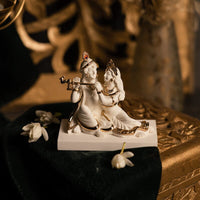
Krishna (The Divine Cowherd): Krishna, one of the most beloved avatars, incarnates to guide humanity through his teachings in the Bhagavad Gita. As a divine prince, Krishna’s wisdom and leadership in the Mahabharata are unparalleled, promoting devotion and righteousness.
-
Buddha (The Enlightened One): In some traditions, Lord Vishnu is believed to have incarnated as Buddha, the founder of Buddhism, to teach compassion, non-violence, and the path to enlightenment.
-
Kalki (The Future Warrior): Kalki is the prophesied future avatar of Vishnu, who will appear at the end of the current age (Kali Yuga) to destroy the forces of evil, restore dharma, and bring about a new era of truth and righteousness.
What is the Significance of Lord Vishnu’s 10 Avatars?
Restoring Dharma and Balance
The Dashavatara demonstrates Vishnu’s constant intervention in maintaining cosmic balance. Whenever adharma rises and threatens the order of the universe, Lord Vishnu manifests to restore righteousness. Each avatar serves a specific role in the cosmic order, addressing challenges ranging from the destruction of demons to the preservation of knowledge and wisdom.
From Matsya saving sacred scriptures to Kalki, the future warrior, ending the age of darkness, Lord Vishnu's avatars symbolize his eternal role as the preserver of life and the restorer of balance. Each form is a manifestation of his divine intervention, ensuring that dharma always prevails.
Lessons of Righteousness, Wisdom, and Courage
Each avatar of Vishnu imparts essential lessons that guide humanity toward a better life. Rama teaches virtue and honor, while Krishna emphasizes the importance of duty and devotion. Vamana demonstrates the importance of humility, and Narasimha shows that no evil can escape justice.
The avatars represent not just physical transformations but also divine teachings. Through their stories, we learn the values of honor, courage, compassion, and wisdom. Each avatar is a guide for living a life in alignment with dharma.
How Do the 10 Avatars of Vishnu Relate to Cosmic Time and Transformation?
Cycle of Time and Cosmic Order
The Dashavatara reflects the journey of time itself. From the creation of the world to its eventual dissolution, Lord Vishnu’s avatars mark the transition between different ages, known as Yugas. Each avatar corresponds to a specific period in the cosmic cycle, with each Yuga representing a different stage in the evolution of consciousness and righteousness.
-
Matsya – The beginning of creation, saving life during the great flood.
-
Kurma – The foundation of cosmic order, supporting stability in the universe.
-
Varaha – The restoration of Earth, ensuring the world’s existence.
-
Narasimha – The destruction of evil, establishing justice.
-
Vamana – The restoration of cosmic order, humbling arrogance.
-
Parashurama – The cleansing of evil, upholding righteousness.
-
Rama – The embodiment of virtue, teaching duty and justice.
-
Krishna – The restoration of dharma, guiding humanity with wisdom.
-
Buddha – The awakening of compassion, promoting peace and non-violence.
-
Kalki – The end of chaos, bringing the return of truth and righteousness.
This cyclical manifestation of Vishnu’s avatars demonstrates the ongoing process of creation, destruction, and restoration in the universe, ensuring that dharma is never lost.
Invoking Lord Vishnu’s Avatars for Protection and Divine Guidance
How Can the 10 Avatars of Vishnu Help Overcome Life’s Challenges?
Invoking the 10 avatars of Lord Vishnu helps devotees overcome the challenges they face in life. Whether seeking protection from harm, guidance through adversity, or wisdom to make difficult decisions, the divine power of Vishnu’s avatars provides the strength and clarity to navigate life’s obstacles. From Rama’s courage to Krishna’s wisdom, each form represents a divine force that can transform one’s life.
Devotees can invoke these avatars for protection, divine guidance, and the strength to face life's trials with righteousness and devotion.
Embrace the Divine Power of Lord Vishnu’s 10 Avatars
The 10 avatars of Lord Vishnu serve as reminders of the eternal presence of the divine in every phase of life and in every moment of time. From the preserver of life in the form of Matsya to the prophesied warrior in Kalki, these avatars showcase Lord Vishnu’s role in restoring balance, protecting the righteous, and destroying evil.
Through these avatars, Lord Vishnu imparts lessons of righteousness, courage, wisdom, and compassion, guiding us through the ages of darkness toward the light of truth. By invoking these divine forms, we invite their blessings into our lives, seeking their protection, wisdom, and guidance on our journey.