







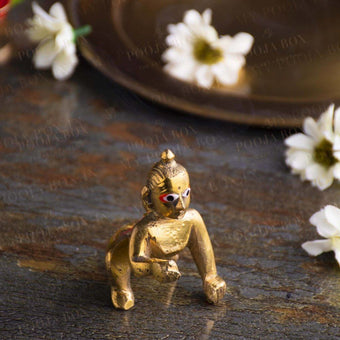

Janmashtami celebrations are not very different from other festivals in the sense that it involves a lot of good food (after the fast ofcourse), a lot of decoration and a large number of people who have gathered around to celebrate and pray in honour of our gods. Having said that, the Janmashtami Puja vidhi is significantly different from others but more on that later.

Janmashtami 2026 Date and Puja Muhurat
Krishna Janmashtami 2026 falls on Friday, 4 September 2026. Dahi Handi follows on Saturday, 5 September 2026.
The main puja is performed at midnight during Nishita Kaal, because Lord Krishna was born at midnight. In New Delhi the Nishita Puja muhurat runs from 11:57 PM on 4 September to 12:43 AM on 5 September, a window of 45 minutes.
|
City |
Nishita Puja muhurat |
|
New Delhi |
11:57 PM to 12:43 AM |
|
Mumbai |
12:14 AM to 1:01 AM |
|
Bengaluru |
11:55 PM to 12:42 AM |
|
Kolkata |
11:13 PM to 11:59 PM |
|
Chennai |
11:45 PM to 12:31 AM |
|
Hyderabad |
11:52 PM to 12:38 AM |
|
Pune |
12:10 AM to 12:57 AM |
|
Ahmedabad |
12:16 AM to 1:02 AM |
|
Jaipur |
12:03 AM to 12:49 AM |
Ashtami Tithi begins at 2:25 AM on 4 September 2026 and ends at 12:13 AM on 5 September 2026. Rohini Nakshatra begins at 12:29 AM on 4 September and ends at 11:04 PM the same day.
Janmashtami celebrations are conducted mainly by the Hindu population in India. However, people from other religions also join in because at the end of the day, it’s an Indian festival, and if you were born in India… you’re Indian, regardless of your religion.
For those who don’t know, this festival is celebrated in honour of the birth of Lord Krishna and falls on September 4th, 2026. Which is why, if you visit a Vaishnava temple during this auspicious period, you’ll note that the countdown for Janmashtami begins before dawn and continues all through the day until the exact moment Lord Krishna was born. This exact moment is said to be somewhere around midnight.
Anyway, you may be wondering how to conduct the Janmashtami puja vidhi. With regards to that, each step of the puja vidhi for Janmashtami has been listed below.

Krishna Janmashtami Puja Vidhi-
1. Janmashtami Puja Essentials
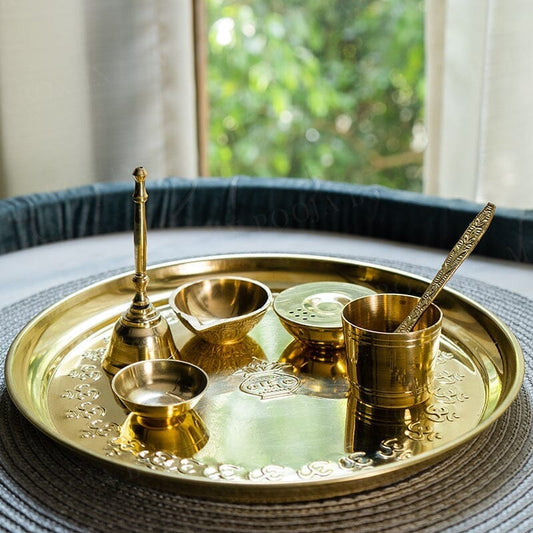
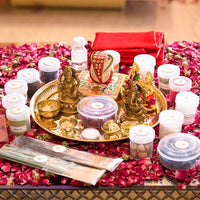
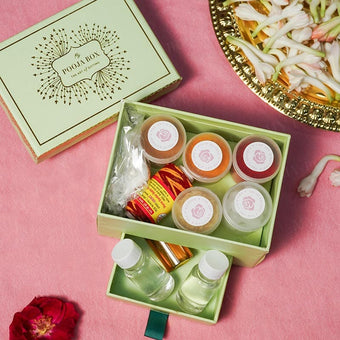
Before the pooja, you must bring home all the pooja essentials you need to conduct the Janmashtami puja. Listed below are the pooja items you will need –
2. Wake & Bathe
Waking up early on the day of Janmashtami is extremely important as the first pooja in honour of Lord Krishna has to be conducted early in the morning. The Krishna idol at home is to be given a bath using sacred ganga jal. Normal water works too but it is advised to stick to Ganga jal.
Right after the bath, the idol is to be given new clothes to wear for the rest of the Janmashtami celebrations. Jewellery should also be placed on or around the idol.

3. Bhog Or Food Offerings
After the first pooja has been successfully conducted, one must offer food items to the lord. These offerings can be in the form of milk, fruit, kheera and other Indian sweets. Simply place the offerings in a bowl right next to the Krishna idol being worshiped. The bowl should be extremely clean and preferably new. It’s also advised to have all items placed over a clean white cloth.

4. Achaman Puja
After the offerings have been made, another pooja is conducted. In this Krishna pooja, diyas are lit and placed around the house, Krishna aarti’s and mantras are sung in harmony by the devotees and some devotees can read out the 108 names of Lord Krishna.
This puja requires you to hold a spoon on your left hand that is carrying ganga jal. This ganga jal is then dripped onto your right hand while chanting “om achyutaya Namah” and the water on your right hand is to be sipped quietly.
Repeat the above process but this time, chant “om anantaya namah” instead. Repeat the process again but with the mantra “om govindaya namah”.
To end the puja, put water on both hands and dry them.

5. The Milk Bath
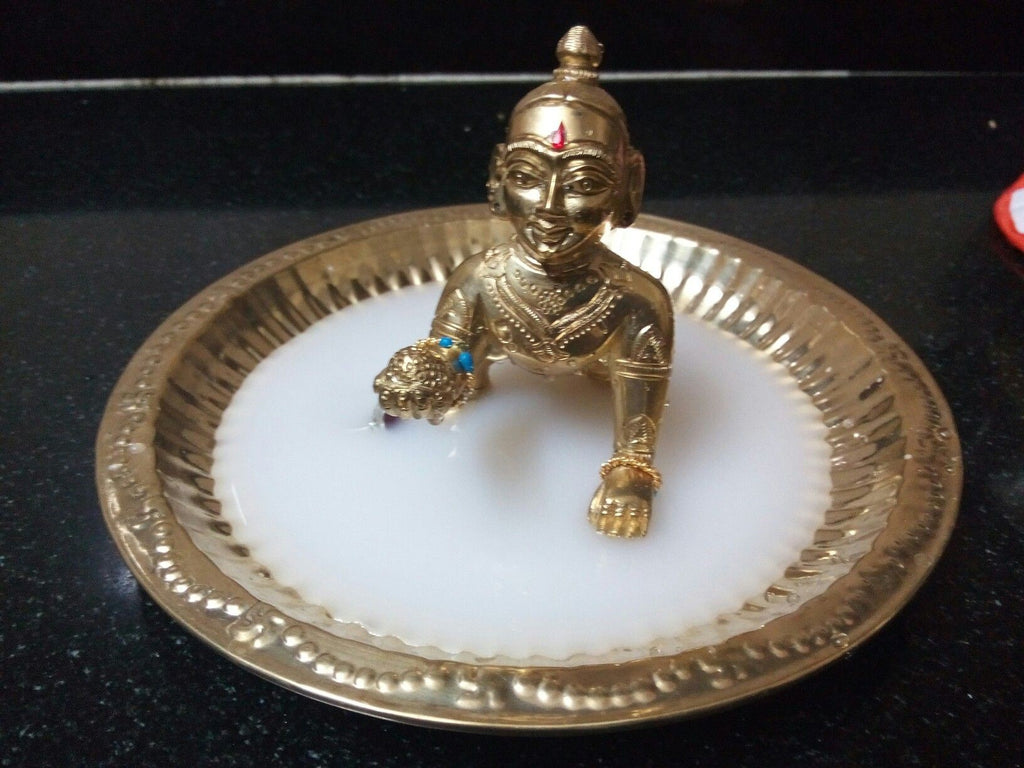
Next, chant the mantra “brahma Samhita” along with other mantras from the vedas, puranas and Upanishads. The mantra is to be chanted while bathing the Krishna idol with milk, ghee and flowers. After the milk bath is complete, the idol can be washed clean with water and then dried.98
6. Post Bath Pooja
Apply sandalwood paste on the idol and start chanting the mantra “Shubham karoti kalyanam” while lighting a diya. Then recite “Guru Brahma Guru Vishnu” followed by any Krishna bhajan of your choice. While all of the previously mentioned mantras are being recited, take an incense stick and move it around the idol 7 times in a circular motion. Then repeat the same process with an aarti lamp.

7. Kumkum at Lord Krishnas Feet
Place the Kumkum at the lords feet and then use the same Kumkum to touch your forehead. Afterwards, you can distribute the prasadana kum kum among other devotees present for the prayers. This Kumkum or tilak can purify and sanctify the body. During this particular phase of the puja vidhi, one can ask for forgiveness and blessings from the lord.
8. Leave The Offerings Behind For The Lord
Once the above steps have been completed, you can leave the offerings made to Lord Krishna behind for him to consume later through the night. Alternatively, you can immerse the following in flowing water before distributing the offerings among devotees. But before nightfall, you must recite the “Hare Krishna” or “Om Namo Bhagavate Vasu Devaya” to close the Janmashtami puja vidhi.
So, all of our fellow devotees can perform the prayers in the sequence mentioned above in order to receive Krishna bhagwans blessings. But remember, all prayers must be made with a clear heart and no evil intentions. This is not just for Krishna but for any god being prayed too. Only people with good in mind will receive what they wish for. So, keep your mind, body and soul clean to bring home the blessings you think you deserve.
9. The Midnight Janmotsav
Everything above prepares the household for the moment the festival is named after. Lord Krishna was born at midnight, so the main ceremony of Janmashtami is performed during Nishita Kaal rather than during the day.
Around fifteen minutes before the muhurat, bring the family to the mandir and light the diya. Keep the jhula or palna ready beside the chowki, lined with fresh bedding.
At the muhurat, perform the abhishek. Bathe the idol first in panchamrit, the mixture of milk, curd, ghee, honey and sugar, then in clean water, and dry it gently with a soft cloth. Dress the idol in a fresh poshak, add the mukut or pagdi, the shringar mala and the bansuri, and place a mor pankh beside it.
Place the dressed idol in the jhula and swing the cradle gently. This is the Janmotsav itself, the welcoming of the newborn Krishna into the home. Blow the shankh if you keep one, ring the bell, and sing the aarti.
Offer the bhog with tulsi leaves placed on top. Many households also cut a kheera at this moment, described in the section below.
Distribute the prasad. If you have observed the vrat, this is when most households in India break the fast.
A traditional touch: small footprints are drawn in rice flour or rangoli colour from the doorway towards the mandir, representing baby Krishna walking into the home.
Janmashtami Vrat: Fasting Rules and Parana Timing
Janmashtami is observed as a vrat by most households. The fast is taken with a sankalpa in the morning after the day's first rituals and is broken at parana.
What the fast permits
No grains are consumed until the fast is broken. The rules followed are the same as those observed for Ekadashi. Households keeping a phalahar vrat take fruit, milk, curd, dry fruits, water chestnut flour, sabudana and rock salt. Those keeping a nirjala vrat take neither food nor water until parana.
Who traditionally keeps it
The vrat is kept by devotees of all ages. It is particularly associated with women praying for a child, for whom it is considered among the most demanding vrats in the Hindu calendar.
Parana, breaking the fast
By Dharma Shastra, parana is done the next morning after both Ashtami Tithi and Rohini Nakshatra have ended. For 2026 that means after 12:13 AM on 5 September, when Ashtami Tithi ends, with Rohini Nakshatra having ended at 11:04 PM on 4 September.
In practice, most households across India break the fast immediately after the midnight puja, once the bhog has been offered and the aarti completed. Both observances are widely followed.
A practical note
The fast runs a full day and ends near midnight. Anyone fasting should keep water within reach unless observing nirjala, and those who are pregnant, unwell or on regular medication commonly keep a phalahar vrat instead of a full fast.
Janmashtami Bhog and Prasad
What to offer
Makhan and mishri are the offering most closely associated with Bal Gopal, since Krishna's fondness for butter runs through every story of his childhood. Alongside it, households offer panchamrit, kheer, fresh fruit, pedas and laddoos.
Tulsi leaves are placed on every item offered to Krishna. No bhog offered to him is considered complete without tulsi.
Dhaniya panjiri
Dhaniya panjiri is the prasad made specifically for the Janmashtami vrat, because it contains no grain and can therefore be eaten while fasting. Coriander seed powder is roasted in ghee and mixed with powdered sugar, chopped dry fruits, makhana and grated coconut. It is offered at the midnight puja and distributed afterwards.
The kheera ritual
A kheera, or cucumber, with its stem still attached is kept beside the jhula or on the puja thali. At midnight it is cut so that the stem separates from the body of the cucumber.
The stem represents the umbilical cord, and cutting it represents the moment Krishna was separated from Devaki and carried out of the prison at Mathura. The cucumber is regarded as pure in ritual use, and its seeds are read as a symbol of new life. Many families also read the act as the prison doors opening. The cut kheera is then offered and distributed as prasad.
The ritual is known in some regions as nal chhedan. It is one of the few Janmashtami customs performed by the whole family together, and a simple way to include children in the midnight ceremony.
Also Keep Ready
The list above covers the essentials. These items complete a full Janmashtami setup:
|
Item |
Used for |
|
Makhan and mishri |
The principal bhog offering |
|
Kheera with stem attached |
The midnight birth ritual |
|
Dhaniya panjiri ingredients |
Grain-free vrat prasad |
|
Mor pankh, peacock feather |
Placed with the idol during shringar |
|
Bansuri, flute |
Part of the shringar |
|
Mukut or pagdi |
Dressing the idol after abhishek |
|
Shringar mala and jewellery |
Dressing the idol after abhishek |
|
Shankh, conch |
Sounded at the moment of Janmotsav |
|
Ghanti, bell |
Rung during the aarti |
|
Bedding set for the jhula |
Lining the cradle |
|
Kapur, camphor |
The aarti |
|
Rangoli colours or rice flour |
Footprints from the door to the mandir |
A note on the list above: panchamrit is prepared fresh from milk, curd, ghee, honey and sugar. It is used for the abhishek and then distributed as prasad.
Dahi Handi and How Janmashtami Is Celebrated Across India
Dahi Handi
Dahi Handi falls on Saturday, 5 September 2026, the day after Janmashtami. An earthen pot filled with curd, butter and buttermilk is hung high above a street, and teams called Govinda pathaks build human pyramids to reach and break it.
The custom re-enacts Krishna's childhood habit of taking butter from the pots of the gopis, which is where the name Makhan Chor comes from. The contents, called gopalkala, are distributed afterwards. It is largest in Maharashtra, particularly Mumbai, Thane and Pune, where registered Govindas are insured and safety gear is required at major events.
Mathura and Vrindavan
The Braj region holds the largest celebrations in India. Temples stay open through the night for the midnight Janmotsav, and Rasa Leela performances re-enact episodes from Krishna's youth.
Maharashtra and Gujarat
Beyond Dahi Handi, Gujarat celebrates at the Dwarkadhish temple in Dwarka, and households mark the festival with fasting and midnight puja.
Odisha and West Bengal
Devotees fast and perform the puja at midnight, with readings from the tenth canto of the Bhagavata Purana, which covers Krishna's life. The following day is Nanda Utsav, celebrating Nanda Maharaj and Yashoda, when the fast is broken and sweets are distributed.
Tamil Nadu and Kerala
Observed as Gokulashtami and Ashtami Rohini, calculated on the solar calendar. Children are dressed as Krishna, and rice flour footprints are drawn from the doorway into the house.
Manipur
Vaishnava communities perform Rasa Leela as classical dance, a tradition distinct to the region.
Krishna Mantras for Janmashtami Puja
The mantras below are the ones referenced in the steps above. Each is chanted during a specific part of the vidhi.
The achaman mantras, used in Step 4
Om Achyutaya Namah, Om Anantaya Namah and Om Govindaya Namah are chanted in sequence while sipping water from the right hand. The three names mean the imperishable one, the endless one, and the protector of cows.
The mool mantra
ॐ नमो भगवते वासुदेवाय
Om Namo Bhagavate Vasudevaya
The twelve-syllable Dwadashakshari mantra, meaning salutations to Lord Vasudeva, the son of Vasudev. It is the most widely chanted Krishna mantra and is recited to close the puja in Step 8. Many devotees chant it 108 times on a tulsi mala.
The Hare Krishna mahamantra
Hare Krishna Hare Krishna, Krishna Krishna Hare Hare, Hare Rama Hare Rama, Rama Rama Hare Hare. Chanted through the night vigil and after the midnight aarti.
Krishna aarti
Aarti is performed twice in the vidhi above, at the post bath pooja and again at the midnight Janmotsav. The full text of the Krishna aarti along with other aartis is available on the My Pooja Box aarti page.