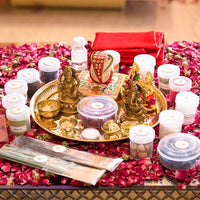









In Hindu culture, symbols are not merely artistic decorations or elements of design; they are a visual alignment with cosmic truths. Just as choosing a Shubh Muhurat aligns your actions with auspicious celestial energy, placing sacred icons in your living space influences the flow of energy in your home, ensuring longevity, prosperity, and peace.
These emblems serve as profound conduits of spiritual energy and philosophical truths. When you place a sacred icon in your home or use it during an auspicious ritual, you are inviting millennia of cosmic vibration and positive energy into your physical living space.
Whether you are looking to deepen your spiritual practice or purchase the right decor for your home temple, understanding these deep meanings changes how you interact with them. Let us break down five of the most sacred symbols in Hinduism, their deep-rooted spiritual meanings, and how you can use them to elevate your home's energy.
1. Om (Aum): The Primordial Sound of the Universe

The Om (often spelled Aum) is the ultimate, most comprehensive sacred symbol in Hinduism. It represents the Pranava—the primordial sound from which the entire universe emerged.
(Om Symbol Structure)
Upper Curve: The state of deep, dreamless sleep (Sushupti)
Lower Curve: The waking state of consciousness (Jagrat)
Middle Curve: The dreaming state between waking and sleeping (Swapna)
Crescent Moon: The veil of illusion (Maya) that separates us from truth
Top Dot: The absolute, highest state of pure consciousness (Turiya)
The Significance & Spiritual Meaning
Philosophically, the three syllables A-U-M reflect the ultimate cosmic cycles. The letter "A" represents creation and the god Brahma; "U" represents preservation and Lord Vishnu; "M" signifies destruction and Lord Shiva. The silence that follows the chanting of Om represents the unmanifested Absolute Reality (Brahman).
Ideal For:
-
Meditation Spaces: Creating a calm focal point for mental clarity.
-
Home Entrances: Acting as a spiritual reset switch for anyone entering your living space.
Mini Tip for Success:
Because Om represents the entirety of creation, it is an excellent focal point for meditation and prayer spaces. Placing a brass or wooden Om wall hanging at your home's entrance or inside your northeast-facing home mandir creates a sanctuary of mental peace. It acts as a spiritual reset switch for your mind every time you look at it.
2. Swastika: The Emblem of Auspiciousness and Well-Being
Derived from the ancient Sanskrit roots su (meaning "good") and asti (meaning "to exist"), the Swastika translates literally to "that which brings well-being" or "let good things prevail." It is an ancient emblem of pure positivity, solar energy, and divine protection.
Key Distinction: The ancient Vedic Swastika sits flat on its base with clockwise-facing arms and four distinct dots. It is a symbol of peace, entirely unrelated to the tilted, 45-degree political emblem used in 20th-century European history.
The Significance & Spiritual Meaning
The four arms of the Hindu Swastika represent a balance of cosmic dimensions:
-
The Four Vedas: Rigveda, Samaveda, Yajurveda, and Atharvaveda.
-
The Four Purusharthas (Goals of Human Life): Dharma (righteousness), Artha (prosperity), Kama (desire), and Moksha (spiritual liberation).
-
The Four Directions: North, South, East, and West, showing that divine blessings flow into your life from every angle.
Ideal For:
-
Festivals and Pujas: Commencing new accounting books or festive celebrations like Diwali.
-
Threshold Protection: Shielding the home from negative external influences.
Mini Tip for Success:
In traditional Indian homes, the Swastika is drawn using vermilion (Kumkum) on doors and ledger books during festivals. To keep this auspicious protective energy permanent, decorate your doorway with a brass Swastika doorstep plaque or hang a curated Swastika design over your main entrance.
3. Lotus (Padma): The Triumph of Purity Over Adversity

The Lotus (known as Padma in Sanskrit) is the ultimate spiritual metaphor for human life and soul progression. It grows out of muddy, murky pond water, yet rises cleanly above the surface to bloom into an incredibly beautiful flower without a single spot of dirt on its petals.
The Significance & Spiritual Meaning
The Lotus symbolizes detachment (Vairagya) and spiritual awakening. It teaches us that even though we live in a material world filled with challenges, desires, and negativity, our inner soul has the power to remain entirely pure and untouched. Most major Hindu deities—including Goddess Lakshmi (Wealth), Goddess Saraswati (Knowledge), and Lord Brahma (Creation)—are depicted sitting upon a blooming lotus, highlighting their absolute spiritual purity.
Ideal For:
-
Altar Aesthetics: Elevating the divine beauty of your home mandir.
-
Welcoming Energy: Creating serene, welcoming points of interest in common living spaces.
Mini Tip for Success:
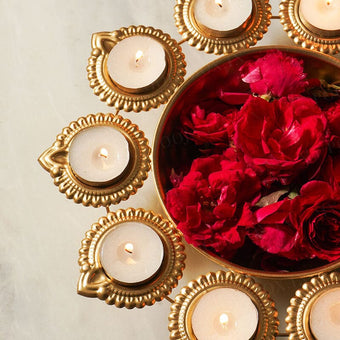
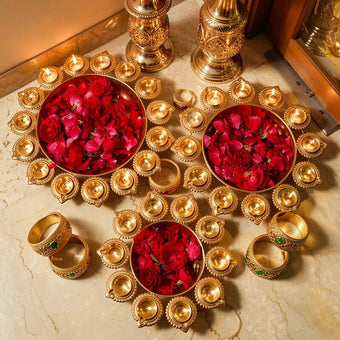
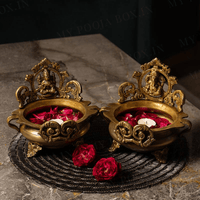
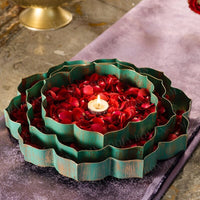
Integrating lotus iconography into your home decor serves as an everyday reminder of resilience and grace. Consider using lotus-shaped brass urli bowls filled with fresh water and floating tea lights at your entrance, or pick lotus design oil lamps (diyas) for your daily evening pooja rituals.
4. Trishula: The Divine Weapon of Cosmic Balance

The Trishula is the iconic triple-bladed trident wielded by Lord Shiva and Goddess Durga. While it looks like a weapon of combat, its deep spiritual design makes it a tool of cosmic balance and internal sovereignty.
The Significance & Spiritual Meaning
The three sharp prongs of the Trishula represent the mastery over various trinities that govern our existence:
|
The Cosmic Trinities |
Left Prong |
Center Prong |
Right Prong |
|
Gunas (Qualities) |
Tamas (Inertia/Darkness) |
Sattva (Purity/Light) |
Rajas (Action/Passion) |
|
Time |
Past |
Present |
Future |
|
Nadis (Energy Channels) |
Ida (Feminine/Moon) |
Sushumna (Central Channel) |
Pingala (Masculine/Sun) |
When Lord Shiva holds the Trishula, it shows that he stands above time, transcends the binding qualities of nature, and brings complete balance to the inner spiritual body.
Ideal For:
-
Warding Off Negativity: Protecting your home from toxic or draining energies.
-
Mental Focus: Grounding spaces meant for deep study, work, or intense meditation.
Mini Tip for Success:
A small brass Trishula placed inside your pooja room brings an aura of discipline, focus, and strength to your space. It serves as an excellent tool for removing internal obstacles like ego, ignorance, and attachment during your spiritual practice.
5. Kalasha: The Vessel of Abundance and Source of Life
The Kalasha is a sacred metallic pot (usually copper or brass) filled with fresh water, topped with a ring of mango leaves, and crowned with a whole coconut. It is seen as the physical manifestation of the entire cosmos during crucial Hindu ceremonies.
The Significance & Spiritual Meaning
The Kalasha represents the womb of creation and the source of life.
-
The Metallic Base represents the grounding energy of the Earth.
-
The Water Inside represents the primordial waters from which all life emerged.
-
The Mango Leaves and Coconut symbolize life's vitality, growth, and divine abundance.
Ideal For:
-
Griha Pravesh & Housewarmings: Inviting permanent prosperity into a new home.
-
Daily Worship: Acting as a central physical anchor for divine entities during a puja.
Mini Tip for Success:
You don't have to wait for a major festival to welcome this energy. Placing a permanently set brass or silver Kalasha on your altar brings an ongoing flow of abundance and emotional harmony to everyone living under your roof.
Quick Reference Summary Table
|
Sacred Symbol |
Sanskrit Name |
Core Meaning |
Best Placement in the Home |
|
Om |
Pranava |
Primordial sound; absolute cosmic consciousness |
Northeast corner, Meditation space |
|
Swastika |
Swastika |
Auspiciousness, good fortune, divine protection |
Main entrance door, Treasury box |
|
Lotus |
Padma |
Purity, detachment, spiritual awakening |
Entrance foyer (Urli bowls), Mandir altars |
|
Trishula |
Trishula |
Mastery over time, gunas, and ego |
Pooja altar, Study room desk |
|
Kalasha |
Kalasha |
Cosmic abundance, life force, creation |
Center of Puja altar, Festival altars |
Elevate Your Home's Spiritual Atmosphere
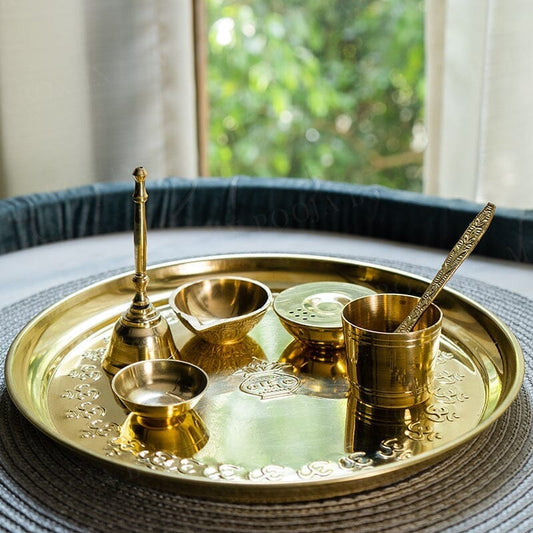
To make the most of these sacred energies, ensure you have the right spiritual essentials. From premium puja thalis to handcrafted brass diyas, urlis, and divine wall hangings, My Pooja Box is here to help you invite prosperity into your home.
Which of these sacred symbols speaks most to your soul? Tell us in the comments below, and may your home be filled with light, balance, and ultimate success!